

One of the biggest surprises in real estate transactions is not the pricing, negotiation, or registration cost —
It is the moment someone says:
“TDS needs to be deducted.”
Suddenly buyers panic, sellers get confused, landlords worry about taxation, and many transactions get delayed simply because nobody explained the rules properly.
Whether you are:
- Buying a property
- Selling a property
- Earning rental income
- Leasing a commercial office
- An NRI selling property in India
Understanding TDS is extremely important.
Because a small mistake today can become a tax notice tomorrow.
What is TDS in Real Estate?
TDS (Tax Deducted at Source) means a portion of money is deducted by the payer and deposited directly with the Income Tax Department.
In property transactions:
- Buyers may deduct TDS before paying sellers
- Tenants may deduct TDS before paying landlords
- Special rules apply for NRI-owned properties
- TDS on Property Purchase (Resident Seller)
Applicable Under Section 194-IA
If you are purchasing a property from a resident Indian seller and the transaction value exceeds 50 lakhs:
Current TDS Rate:
1% TDS
Applicable on:
- Sale value OR
- Stamp duty value
Whichever is higher.
Important Things Buyers Often Miss
TDS is applicable not only on:
- Basic property value
But also on charges connected to the transaction such as:
- Parking
- Clubhouse
- Maintenance deposits
- Other compulsory charges
GST is generally excluded for under-construction purchases.
Common Mistakes Buyers Make
- Forgetting to deduct TDS
- Deducting wrong percentage
- Missing payment deadlines
- Confusing resale and NRI transactions
- Not issuing Form 16B
Many genuine buyers only discover this during registration or loan processing.
- TDS on Rental Income
This is where many landlords and tenants get confused.
A) Individual Tenants Paying High Rent
Under Section 194-IB:
If monthly rent exceeds prescribed thresholds, tenants may need to deduct:
Current TDS Rate:
2% TDS on rent
(For qualifying cases under current provisions)
B) Corporate Leasing / Commercial Rentals
Under Section 194-I:
Current TDS Rates:
- 10% for use of land/building/furniture in most lease structures
- Applicable commonly in commercial and corporate leasing arrangements
This is very common in premium leasing markets across:
- Lower Parel
- Bandra
- Prabhadevi
Why Landlords Must Pay Attention
If TDS is deducted:
- Your monthly inflow becomes slightly lower
- But the deducted amount reflects as tax credit while filing returns
If done incorrectly:
- Refund delays can happen
- Tax mismatches occur
- Notices may be triggered
- TDS on Sale of Property by NRI
This is the area where most confusion happens.
And also where buyers make the biggest mistakes.
Buying Property from an NRI Seller?
Then the standard 1% rule does NOT apply.
Instead:
Applicable Under Section 195
TDS becomes significantly higher.
Current NRI TDS Rates
A) Long-Term Capital Gain (Property held above 24 months)
12.5% + surcharge + 4% cess
Effective rate may reach approximately:
14% to 15%+ depending on value slabs
B) Short-Term Capital Gain
Current TDS:
- As per applicable income tax slab rates
- Plus surcharge and cess
The Biggest Shock for Buyers
Many buyers assume:
“Only 1% TDS applies.”
And later discover:
- TAN registration is needed
- Higher deductions apply
- Additional forms are required
- CA certificates may be necessary
This creates last-minute stress during registration.
Can NRIs Reduce TDS?
Yes.
NRIs can apply for:
Lower/Nil Deduction Certificate under Section 197
This helps if:
- Actual capital gain is lower
- Exemptions are available
- Reinvestment benefits apply
Without proper planning, excess TDS may get blocked until tax refunds are processed.
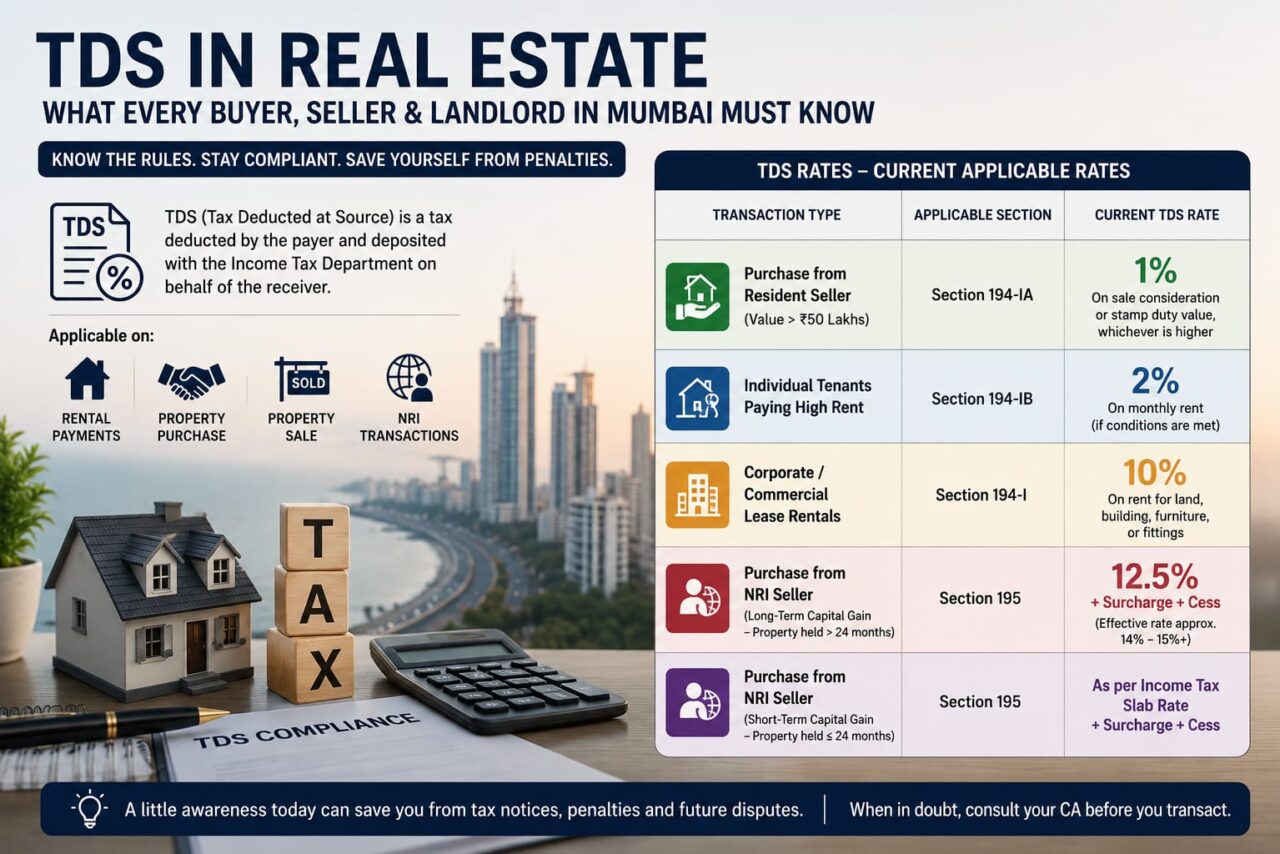
Simple TDS Summary Table
Purchase from Resident seller above 50L – 1%
High-value individual rental payment – 2%
Corporate/commercial lease rental – 10%
Purchase from NRI (LTGC) – 12.5%+ surcharges +cess
Purchase from NRI (STGC) – Slab rate + surcharges + cess
Why TDS Knowledge is Important in Real Estate
Because one mistake can affect:
- Registration
- Tax compliance
- Loan processing
- Seller payments
- Refunds
- Future notices
And in Mumbai’s high-value property market, even a small percentage can mean lakhs of rupees.
Final Thoughts
Real estate is no longer just about:
- Location
- Pricing
- Negotiation
It is also about:
- Compliance
- Structuring
- Documentation
- Tax awareness
The smartest buyers and sellers are not just those who close deals —
They are the ones who close deals correctly.
For guidance on residential, commercial, leasing, NRI transactions, and off-market opportunities across Mumbai, connect with Houseville.
For detailed tax applicability, always consult a qualified Chartered Accountant before executing a transaction.




Leave a Reply